Top 5 Materials for 3D Printing Dental Crowns and Bridges in 2026
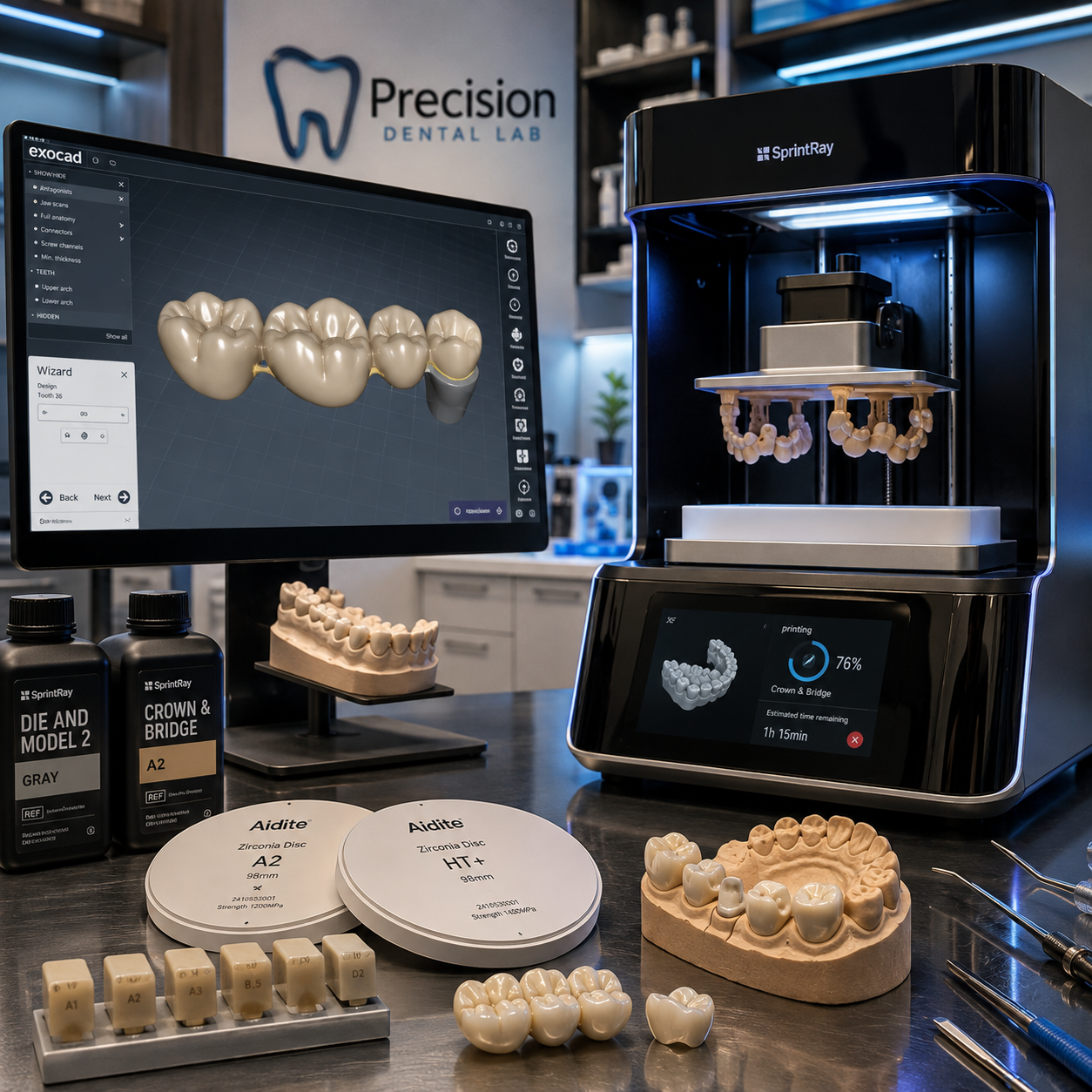
In 2026, material selection determines whether a digital dental restoration is suitable for a short-term provisional, an anterior crown, a high-load posterior crown, or a multi-unit bridge. The most useful comparison includes mechanical strength, esthetics, biocompatibility, accuracy, durability, printability, and the full post-processing sequence.
Dental-grade materials must be evaluated within a validated digital dentistry workflow, from intraoral scanning and CAD design through fabrication, curing, sintering, finishing, and quality control. A material name alone is not enough: two products described as resin, ceramic, or composite may have very different indications and processing requirements.
How to Choose a Material for 3D-Printed Crowns and Bridges
The best material for 3D-printed crowns and bridges depends on the restoration’s intended service, occlusal load, span length, esthetic demand, and manufacturer-validated indication. Strength matters, but it must be considered alongside fit, surface finish, biocompatibility, and post-processing reliability.
A practical selection framework is the LOAD test: Location, Occlusal demand, Appearance, and Duration. An anterior crown may prioritize translucency and shade control, while a posterior bridge requires greater resistance to flexure and fracture. A restoration intended for weeks has a different risk profile from one expected to function for years.
- Mechanical performance: assess flexural strength, fracture resistance, wear behavior, and connector requirements rather than relying on marketing labels.
- Esthetics: review translucency, shade stability, surface texture, and the ability to characterize or polish the restoration.
- Biocompatibility: use only dental materials with appropriate documentation for the intended intraoral application.
- Accuracy: confirm printer resolution, shrinkage compensation, support strategy, and the effect of curing or sintering on fit.
- Workflow: calculate washing, drying, post-curing, polishing, staining, glazing, or sintering time.
- Longevity: match the material to expected duration, parafunctional load, hygiene conditions, and bridge span.
Clinical and laboratory teams should also verify the instructions for use, approved printer and curing unit combinations, required layer settings, and local regulatory requirements. The U.S. Food and Drug Administration dental-device guidance is a useful reference point, although product-specific documentation remains decisive.
1. Dental Resin
Dental resin is the most accessible material for producing accurate 3D-printed crowns and bridges, especially provisionals and selected definitive restorations. Its main advantages are fast production, detailed anatomy, and efficient digital handling, while its limitations include post-curing sensitivity, wear, and product-specific clinical restrictions.
Modern crown-and-bridge resins include temporary materials, long-term provisional materials, and some products indicated for permanent single crowns or limited-span restorations. They are commonly processed with LCD, DLP, or SLA printers, followed by solvent washing, controlled drying, support removal, and post-curing.
Resin can reproduce fine margins and occlusal anatomy with relatively little waste. Shade options and characterization systems also make it attractive for anterior cases. However, the final properties depend heavily on exposure settings, resin temperature, cleaning, curing intensity, and oxygen inhibition. Under-curing can affect strength and biocompatibility; excessive or poorly controlled curing may alter fit or shade.
Best uses and limitations
- Temporary crowns and bridges with a defined service period.
- Selected definitive single crowns when the product is specifically indicated.
- Try-ins, diagnostic restorations, and digital mock-ups.
- Cases where fast chairside or laboratory turnaround is valuable.
Printable resin is not automatically interchangeable across applications. A resin validated for models or surgical guides should not be assumed suitable for permanent intraoral crowns. Choosing resin for speed means accepting greater dependence on validated post-processing and careful control of wear and fracture risk.
2. Zirconia
Zirconia is among the strongest and most durable materials for demanding crowns and bridges, particularly posterior restorations and frameworks. In 2026, subtractive CAD/CAM milling remains the established zirconia workflow, while additive zirconia printing continues to develop and requires specialized equipment, debinding, and high-temperature sintering.
Zirconia offers high flexural strength, chemical stability, and resistance to many forms of intraoral wear. Modern formulations, including more translucent grades, can deliver improved esthetics compared with earlier opaque zirconia. Even so, translucency and strength often involve a material trade-off, and multilayer zirconia may require careful design to position the appropriate layer within the restoration.
The digital workflow typically includes scanning, CAD design, milling or additive shaping, support or bur-mark management, coloring where applicable, and sintering. Sintering causes controlled shrinkage, so the CAD system must apply the correct material-specific compensation. Poorly controlled sintering, contamination, inadequate connector dimensions, or aggressive adjustment can compromise performance.
Zirconia is particularly suitable for high-load posterior crowns, implant-supported restorations, and bridges when the selected product and design meet the manufacturer’s requirements. It may be less convenient than resin because equipment, milling or printing infrastructure, sintering time, and finishing protocols add complexity.
3. Hybrid Ceramic
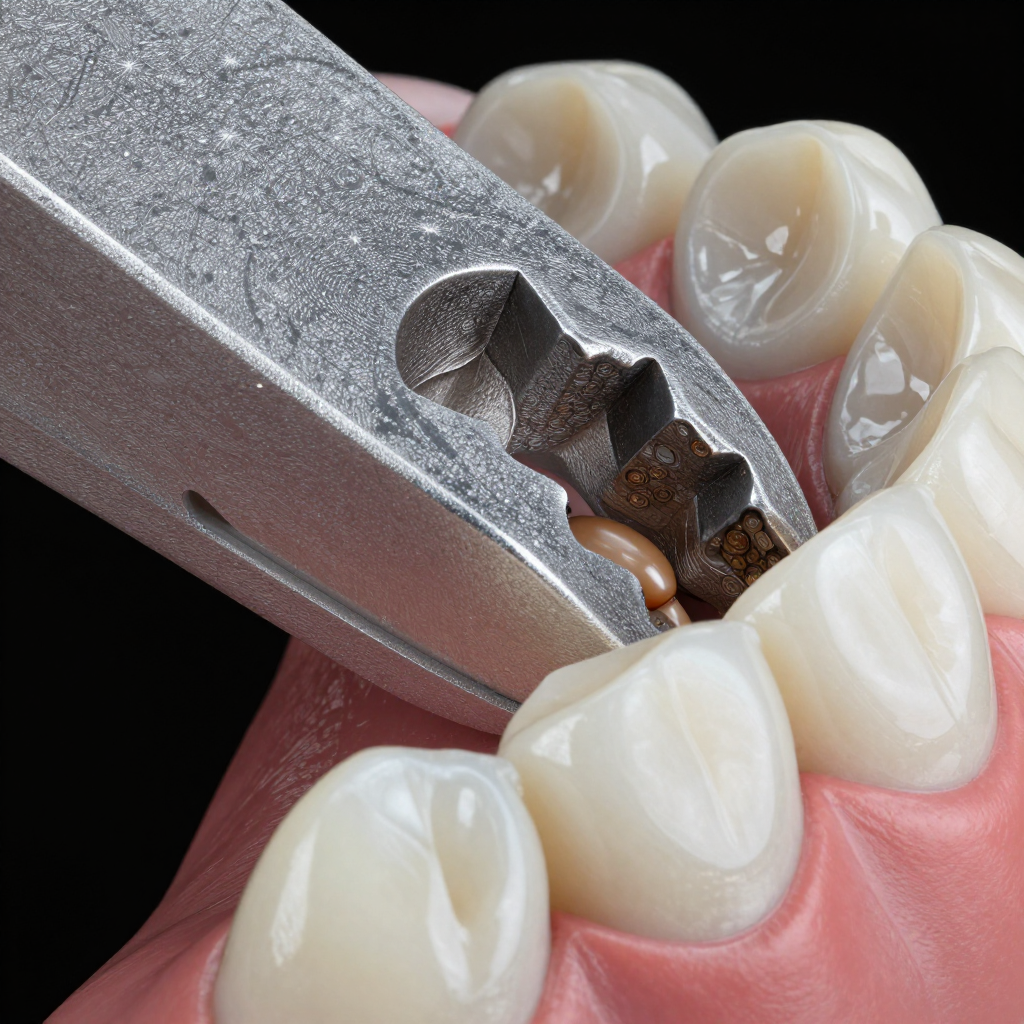
Hybrid ceramic combines a ceramic-rich phase with a polymer component to balance ceramic-like esthetics and some polymer flexibility. It can be attractive for selected crowns and inlays, but its exact behavior varies substantially by formulation, manufacturing method, and approved indication.
Compared with traditional brittle ceramics, hybrid ceramic materials may be easier to mill, adjust, polish, and repair. Their polymer component can provide a more forgiving response during finishing, while the ceramic phase supports surface appearance and stiffness. This combination can suit selected anterior or premolar restorations where natural-looking translucency and manageable chairside adjustment are priorities.
Most established hybrid ceramics are produced through CAD/CAM milling rather than conventional resin printing. Emerging additive systems may use filled photopolymers or ceramic-loaded suspensions, but these should not be treated as equivalent to a factory-polymerized or industrially processed hybrid block.
Potential constraints include water absorption, surface wear, shade change, reduced strength compared with high-strength zirconia, and limitations on bridge span or connector design. Polishing is especially important because a rough surface can increase plaque retention and antagonist wear. Always confirm whether a product is indicated for a definitive crown, a provisional restoration, or another application.
4. PMMA
PMMA, or polymethyl methacrylate, is a dependable choice for provisional crowns, temporary bridges, diagnostic restorations, and long-term interim treatment. It offers efficient CAD/CAM production and straightforward finishing, but it generally should not be selected as a universal substitute for definitive ceramic or metal-based restorations.
PMMA may be milled from industrially polymerized discs or produced with compatible additive systems. Industrial polymerization can reduce porosity and residual monomer compared with some manually processed acrylics. In either case, the restoration needs careful margin refinement, polishing, occlusal inspection, and evaluation of contact points.
Its advantages include low material cost, light weight, repairability, and easy modification during staged treatment. PMMA is useful when a patient needs a provisional while implants integrate, periodontal tissues mature, or a complex occlusal scheme is tested.
The main limitations are lower wear resistance and fracture resistance than definitive high-strength materials. Long-span temporary bridges, bruxism, thin connectors, and inadequate polishing can accelerate failure. PMMA is also more vulnerable to surface changes and staining over extended service. A stronger provisional grade may improve performance, but the indication and time frame still matter.
5. Composite Resin
Composite resin uses a resin matrix reinforced with inorganic fillers to improve stiffness, polishability, and esthetic control. Printable composite-based materials can support customized restorations, but their clinical performance depends on filler loading, conversion, bonding strategy, and the manufacturer’s validated workflow.
Compared with unfilled or lightly filled dental resins, composite resin may offer better surface character, shade layering, and repairability. These qualities are valuable in anterior workflows where a technician needs to adjust anatomy, add characterization, or repair a chipped edge rather than replace the entire restoration.
Some composite materials are designed for permanent single-tooth restorations; others are intended for provisionals, veneers, denture teeth, or laboratory components. The label composite does not establish suitability for a bridge. Bridge indications require attention to connector geometry, span length, occlusal forces, support design, and fatigue behavior.
Post-processing may include washing, staged curing, polishing, staining, and glazing or surface sealing. Incomplete conversion, contamination, or an incompatible curing unit can reduce biocompatibility and mechanical performance. Composite resin is often a strong esthetic option for carefully selected cases, yet zirconia or another definitive material may be more appropriate for heavy posterior loading.
Material Comparison and Selection Guide
The most suitable material depends on the restoration type and validated indication: dental resin and PMMA often lead for provisionals, zirconia leads for high-load durability, and hybrid ceramic or composite resin can be useful when esthetics and adjustability carry more weight.
| Material | Best-fit applications | Key strengths | Main caution | Post-processing |
|---|---|---|---|---|
| Dental resin | Temporary crowns, selected definitive singles | Fast printing, detail, efficient workflow | Product-specific wear and curing limits | Wash, dry, support removal, post-cure, polish |
| Zirconia | Posterior crowns, demanding bridges | Strength and durability | Requires precise design and sintering | Mill or print, color, sinter, polish or glaze |
| Hybrid ceramic | Selected esthetic crowns and CAD/CAM restorations | Polishability and balanced flexibility | Lower load tolerance than strong zirconia | Mill or validated additive process, polish |
| PMMA | Provisionals, diagnostic and long-term interim bridges | Repairable, economical, easy to adjust | Wear and fracture over extended service | Finish, polish, verify contacts and occlusion |
| Composite resin | Esthetic selected restorations and customized cases | Repairability and characterization | Performance varies with filler and conversion | Wash, cure, characterize, polish or glaze |
Use this decision sequence in a laboratory or clinic:
- Define whether the restoration is provisional, interim, or definitive.
- Map the load: anterior, posterior, implant-supported, bruxism risk, and bridge span.
- Set the esthetic threshold, including translucency, shade, texture, and characterization.
- Confirm printer, milling unit, resin tank, curing unit, furnace, and software compatibility.
- Review the manufacturer’s instructions for use and applicable clinical requirements before fabrication.
The complete CAD/CAM dentistry workflow begins with an intraoral scan or digitized impression, proceeds through margin capture and CAD design, and ends with fabrication, post-processing, finishing, and quality control. Fit checks, proximal contacts, occlusion, surface integrity, and documentation should be completed before clinical use. Material indications and regulatory status vary by product and jurisdiction; dentist and laboratory judgment remains essential.
Frequently Asked Questions
Which material is best for 3D-printed dental crowns?
The best material depends on the indication. A validated dental resin may suit a temporary or selected definitive single crown, while zirconia is often preferred for demanding posterior use. Esthetic requirements, occlusion, and manufacturer instructions determine the final choice.
What is the strongest material for 3D-printed dental bridges?
Zirconia is generally the strongest option among the materials discussed, but additive zirconia workflows require specialized printing, debinding, and sintering. Bridge design, connector dimensions, span, and product validation remain critical.
Are 3D-printed resin crowns suitable for permanent use?
Some dental resins are indicated for permanent crowns, while many are intended only for temporary or interim restorations. Check the specific product’s regulatory documentation, validated printer settings, curing protocol, and clinical indication.
How does zirconia compare with printable dental resin?
Zirconia generally provides greater strength and long-term durability, particularly under high load, but it requires more complex fabrication and sintering. Printable resin offers faster production and fine detail, with greater dependence on curing and product-specific wear performance.
What post-processing is required after printing a dental restoration?
Typical resin workflows include washing, drying, support removal, and controlled post-curing, followed by finishing and polishing. Zirconia requires debinding and sintering, while composite and PMMA workflows may require curing or milling, polishing, characterization, and detailed quality control.